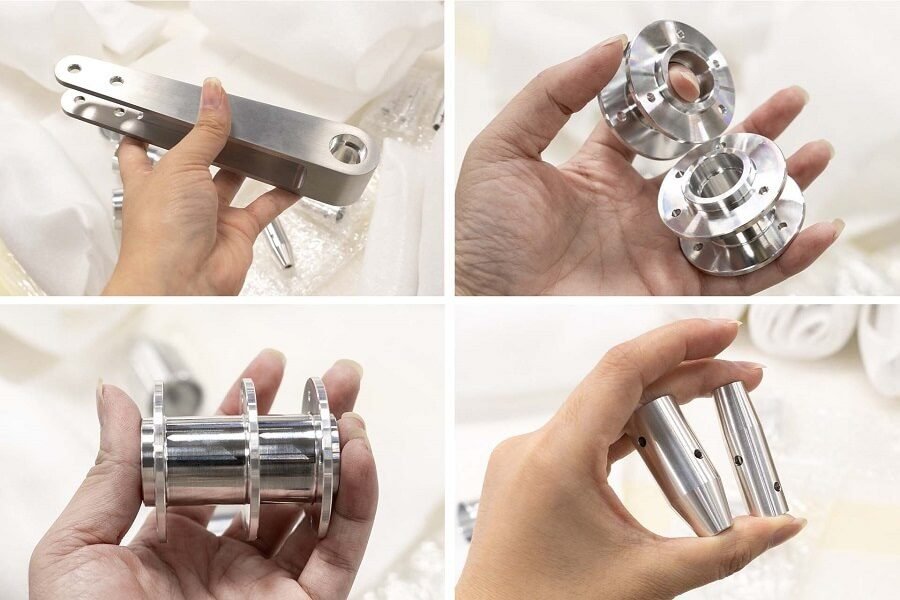

In today’s competitive market, businesses are under constant pressure to develop new products quickly while maintaining quality, functionality, and customer appeal. Traditional product development can take months or even years because every design decision must be carefully evaluated before manufacturing begins. This lengthy process can increase costs and make it difficult for companies to respond quickly to changing customer expectations. Rapid prototyping services provide a practical solution by allowing businesses to transform concepts into physical or functional prototypes in a much shorter time.
Rapid prototyping enables product designers, engineers, startups, and manufacturers to test ideas before committing to full-scale production. By creating an early version of a product, teams can identify design problems, evaluate functionality, collect feedback, and make improvements. This approach makes innovation faster, more flexible, and less risky.
Understanding Rapid Prototyping in Product Development
Rapid prototyping is a product development approach that uses modern manufacturing and design technologies to quickly create a prototype from a digital model. Depending on the project, prototypes can be produced through methods such as 3D printing, CNC machining, vacuum casting, injection molding, and other advanced manufacturing techniques.
The primary purpose is not necessarily to create a final production-ready product immediately. Instead, the prototype acts as a practical representation of the concept. Designers and engineers can examine its appearance, dimensions, ergonomics, assembly, and performance.
This process gives development teams an opportunity to learn from the physical product before investing heavily in tooling and mass production. As a result, businesses can make better decisions earlier in the development cycle.
Faster Testing and Validation
One of the biggest advantages of rapid prototyping is the ability to test product concepts quickly. A digital design may appear perfect on a computer screen, but real-world testing can reveal issues that are difficult to predict.
For example, a prototype may show that certain components do not fit correctly, a button is difficult to access, or a product is uncomfortable to hold. Engineers can identify these problems before the product reaches customers.
With rapid prototyping services, businesses can create an initial prototype, test it, modify the design, and produce another version without restarting the entire development process. This repeated testing cycle helps teams improve product performance while keeping development schedules under control.
Reducing Product Development Risks
Launching a new product always involves some level of risk. Manufacturing thousands of units based on an untested design can be extremely expensive if problems appear after production begins.
Rapid prototyping reduces this risk by allowing companies to validate important design decisions before large-scale manufacturing. Engineers can check dimensions, material choices, assembly methods, and mechanical performance at an earlier stage.
Finding a design problem during prototyping is generally easier and less expensive than discovering the same problem after tooling has been created or production has already started. This makes prototyping an important risk-management strategy for businesses developing new products.
Lowering Development Costs
Although creating prototypes requires an investment, it can help reduce overall product development costs. Traditional development processes may involve expensive tooling, molds, production runs, and design revisions.
A prototype allows businesses to identify problems before these larger expenses occur. If a design needs to be changed, the digital model can often be updated and another prototype can be produced relatively quickly.
This approach is especially valuable for startups and small businesses with limited development budgets. Instead of committing substantial resources to an untested design, they can gradually refine the product and make investment decisions based on actual testing results.
Improving Collaboration Between Teams
Product development usually involves multiple teams, including designers, engineers, manufacturers, marketers, and business managers. Communicating a product concept using only drawings or digital models can sometimes lead to misunderstandings.
A physical prototype provides everyone with something tangible to evaluate. Designers can discuss appearance, engineers can examine functionality, and manufacturers can assess production considerations.
This shared reference point can improve communication and help teams identify issues earlier. Better collaboration also reduces the likelihood of misunderstandings becoming expensive manufacturing problems later.
Supporting Customer Feedback
Successful products are often built around real customer needs. However, it can be difficult for customers to fully understand an idea from a description or computer-generated image.
A physical prototype makes it easier for potential users, focus groups, investors, and business partners to understand the product. They can interact with it and provide practical feedback.
For example, users may suggest changes to the product’s size, shape, controls, materials, or overall usability. Businesses can then incorporate this feedback into later prototype versions.
This customer-centered approach helps companies develop products that are more closely aligned with market expectations.
Accelerating Time to Market
Speed is an important factor in modern product innovation. Companies that can introduce useful products earlier may gain an advantage over competitors.
Rapid prototyping services shorten several stages of the development process. Instead of waiting weeks or months for certain traditional manufacturing processes, teams can often produce prototypes much faster using digital manufacturing technologies.
Faster prototyping does not mean sacrificing quality. Rather, it allows development teams to move through testing and revision cycles more efficiently. When fewer major problems remain at the end of development, the transition toward production can also become smoother.
Enabling Multiple Design Iterations
Innovation rarely happens through a single perfect design. Most successful products go through several revisions before reaching their final form.
Rapid prototyping supports this iterative approach. Designers can create one version, evaluate it, identify improvements, and produce another version.
Each iteration provides additional information about what works and what needs to change. This encourages experimentation because teams can explore different shapes, features, materials, and configurations without making an immediate commitment to mass production.
The ability to experiment is particularly valuable when developing complex or innovative products where there is no established design template.
Helping Startups Bring Ideas to Life
For startups, transforming an idea into a marketable product can be challenging. Investors and potential customers often want to see evidence that the concept is practical.
A functional prototype can make an idea easier to demonstrate. Entrepreneurs can use prototypes during investor presentations, customer research, trade shows, and internal testing.
Rapid prototyping also allows startups to develop a minimum viable version of a product and learn from early feedback. Instead of spending their entire budget on a final design, they can use smaller development cycles to improve the concept gradually.
Supporting Modern Manufacturing Strategies
Rapid prototyping is closely connected with digital manufacturing. Modern product development often begins with computer-aided design and moves toward digitally controlled manufacturing technologies.
This digital workflow makes it easier to update designs and produce new versions. It also supports customization and small-batch production, which are increasingly important in many industries.
Industries such as automotive, aerospace, medical devices, consumer electronics, industrial equipment, and custom products can benefit from these capabilities. The specific prototyping method depends on factors such as material, product size, required accuracy, surface finish, and functional requirements.
Making Innovation More Flexible
Markets can change quickly, and companies need development processes that can adapt. A rigid product development system may make it difficult to respond to new customer requirements or competitive pressures.
Rapid prototyping creates flexibility by making design changes easier to manage. If research reveals that customers prefer a different feature or configuration, the development team can revise the design and evaluate the new version.
This flexibility allows companies to treat product development as a continuous learning process rather than a single fixed sequence of decisions.
Conclusion
Product innovation depends not only on having creative ideas but also on being able to test and improve those ideas efficiently. Rapid prototyping services provide businesses with the ability to turn digital concepts into physical products quickly, evaluate designs, identify problems, and make informed improvements before full-scale manufacturing.
By reducing development risks, controlling costs, supporting customer feedback, improving collaboration, and shortening development cycles, rapid prototyping can give businesses a stronger foundation for successful product launches. Whether a company is a startup developing its first product or an established manufacturer creating a new generation of products, rapid prototyping can make the innovation process faster, more flexible, and more effective.
