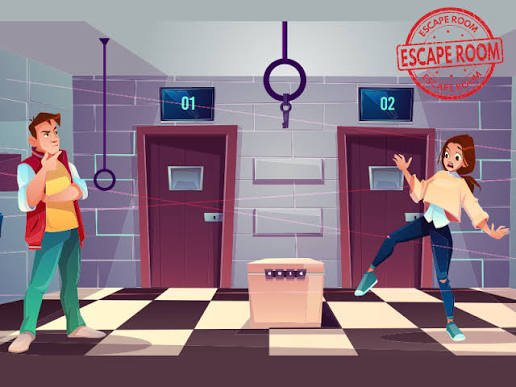

In recent years, the entertainment landscape has shifted dramatically from passive consumption to active participation. At the forefront of this movement is the escape room, a live-action, team-based game where players are locked in a themed environment and must find clues, solve puzzles, and accomplish tasks within a set time limit—usually sixty minutes—to achieve a specific goal. While originally conceived as a thrilling recreational activity for friends and families, the escape room has rapidly evolved into a premier tool for corporate team-building, educational enrichment, and cognitive development. By placing individuals in a high-stakes, immersive scenario, these games strip away everyday distractions and force participants to rely on one another’s unique strengths, fostering deep collaboration and sharp analytical thinking.
The Psychology of Shared Pressure and Collaboration
When a group steps inside an escape room, the ticking clock immediately establishes a shared sense of urgency. Unlike traditional workplace projects where deadlines might be weeks away and responsibilities can be easily compartmentalized, a sixty-minute countdown demands immediate alignment. Psychologically, this mild, controlled stress acts as a powerful catalyst for group cohesion. Everyone in the room shares the exact same objective, instantly leveling traditional hierarchies. A junior intern might spot a hidden key that a senior executive completely overlooks, reinforcing the reality that every team member holds vital value.
This environment naturally breaks down communication silos. In standard office settings, employees often default to email threads or structured meetings that inhibit spontaneous brainstorming. Inside an escape room, silence is the enemy of progress. Players must vocalize their findings in real time, share half-formed theories, and actively listen to the discoveries of others. If one person finds a four-digit padlock and another discovers a series of dates written on a vintage postcard, progress only happens when those two individuals bridge the gap through clear, concise dialogue. Over the course of an hour, groups learn to filter out noise, prioritize critical information, and communicate with precision under pressure.
Navigating Diverse Cognitive Styles and Problem-Solving
A well-designed escape room is never built around a single type of intelligence. Instead, game designers intentionally incorporate a wide variety of challenges that appeal to different cognitive strengths. Some puzzles require strict mathematical logic or pattern recognition, while others demand spatial awareness, lateral thinking, physical dexterity, or keen observational skills. Because no single person is an expert in every domain, the game organically encourages a division of labor based on individual aptitudes.
Analytical and Linear Thinking
Many challenges within an escape room follow a sequential, deductive path. Players must gather scattered data points, organize them systematically, and apply rules of logic to arrive at a specific code or mechanism. Analytical thinkers thrive in these moments, bringing structure to chaos by tracking which clues have already been used and which remain unsolved. Their methodical approach prevents the team from wasting precious minutes repeating failed attempts or misinterpreting straightforward instructions.
Creative and Lateral Thinking
Conversely, purely linear thinkers can easily hit a wall when confronted with abstract riddles or unconventional uses of everyday objects. Lateral thinkers excel here by questioning assumptions and looking at the environment from fresh angles. They are the players who think to check underneath a rug, shine a blacklight on a seemingly blank wall, or realize that a poem’s rhyme scheme corresponds to directional inputs. When analytical and creative minds collaborate, they form a balanced problem-solving unit capable of overcoming multidimensional obstacles.
Developing Crucial Soft Skills in Real Time
Beyond the immediate thrill of cracking codes and unlocking secret doors, participating in an escape room cultivates a suite of transferable soft skills that carry directly into professional and personal life.
Active Listening and Ego Management
One of the fastest ways to fail an escape room is for players to talk over one another or stubbornly cling to a flawed theory. Because time is scarce, teams quickly learn the importance of active listening. When a teammate proposes an idea, others must evaluate it objectively rather than dismissing it out of hand. Furthermore, players learn to manage their egos; if a proposed solution does not work after two or three tries, the team must swiftly pivot and hand the puzzle over to a fresh pair of eyes without anyone taking offense.
Resource Allocation and Time Management
Sixty minutes passes remarkably fast when a group is immersed in complex tasks. Successful teams instinctively adopt project management principles on the fly. Rather than having six people crowd around a single small lockbox, effective groups split into smaller sub-teams to tackle multiple puzzles simultaneously. They designate someone to keep track of the remaining time, periodically regroup to share overarching progress, and know when to ask the game master for a strategic hint rather than letting pride stall their momentum.
Resilience and Adaptability
Failure is an inherent part of the puzzle-solving process. Keys will not fit, combinations will fail, and red herrings will temporarily lead players astray. An escape room teaches participants to treat these setbacks not as defeats, but as useful data points that eliminate incorrect paths. Adapting quickly to unexpected twists—such as a hidden door opening to reveal an entirely new chamber halfway through the game—builds mental agility and emotional resilience.
Bridging the Gap Between Play and Professional Growth
Organizations across the globe have recognized that traditional corporate workshops and trust-fall exercises often feel forced and fail to produce lasting behavioral changes. Because an escape room is genuinely engaging and fun, participants drop their professional guards and exhibit their authentic working styles. Managers gain invaluable insights into how their teams naturally organize, who steps up as a facilitator, who excels at detailed execution, and where communication bottlenecks tend to occur.
Following the game, a structured debriefing session allows teams to reflect on their performance. Discussing how they handled moments of frustration, how they celebrated small victories, and what they would do differently next time transforms an entertaining outing into a concrete learning experience. Teams leave not just with shared memories of a thrilling adventure, but with a tangible blueprint for better collaboration back at the office.
Lasting Impact on Collaborative Culture
Ultimately, the true magic of an escape room lies in its ability to demonstrate what a group can achieve when every voice is heard and every talent is utilized. The challenges are intentionally crafted to be insurmountable for a lone individual within the allotted timeframe, making cooperation an absolute necessity rather than an optional nice-to-have. By navigating intricate puzzles, managing shared pressure, and celebrating collective breakthroughs, participants build genuine trust and sharpen their critical thinking abilities. Whether used by corporate teams, students, or groups of friends, these immersive experiences prove that the most complex problems are always solved best together.
